
Best starting point: an Invisalign evaluation for teachers seeking discreet, removable treatment. Best comparison option: other clinician-supervised clear aligners. Best alternative when removing trays is impractical: fixed braces, which are not clear aligners. This 2026 guide explains how to compare these routes against classroom speaking, meal breaks, cleaning and your individual dental needs.
- The best clear aligners for teachers depend on clinical suitability, classroom routines and consistent wear—not appearance alone.
- Invisalign deserves consideration when you want removable treatment supported by an individual assessment.
- Ortodonciainvisaling offers personalized evaluation and iTero scanning for patients considering Invisalign.
- Fixed braces are an alternative when managing removable trays conflicts with your teaching routine.
Why this matters for teachers
Teaching puts speech and daily routines at the center of your treatment decision. You need to explain ideas, answer questions and manage breaks without turning dental care into another classroom task.
The right option is the treatment you can follow consistently and that your clinician considers appropriate. A discreet appliance is not automatically a practical one, and a practical appliance still needs to suit your teeth and bite.
Ortodonciainvisaling offers Invisalign treatment, personalized evaluation and iTero scanning. For teachers living or working in Providencia or Las Condes, the verified address is Avenida Las Condes 10465; this does not establish a location in Providencia.
What makes the best clear aligners for teachers?
Use these criteria before comparing names. They connect the treatment plan to what you actually do throughout a school day.
- Clinical suitability: Your clinician must assess your teeth, gums and bite before recommending an appliance. Appearance alone cannot establish suitability.
- Speaking demands: Ask about adapting to an appliance while teaching, reading aloud and holding conversations. Speech experiences differ between patients.
- Wear routine: Removable aligners require consistent use according to your prescribed schedule. Your timetable needs to accommodate that schedule.
- Meal and cleaning access: Consider where you will remove, store and clean trays, and how you will clean your teeth at school.
- Treatment oversight: Establish who checks progress, how appointments work and whom you contact if a tray does not fit.
- Treatment scope: Compare the actual proposed tooth movements and follow-up arrangements, not just the appliance name or a digital preview.
For a 2026 decision, put clinical suitability first and classroom convenience second. Neither an attractive tray nor a familiar brand replaces an individual assessment.
Treatment options at a glance
These are treatment routes, not a ranking of proven clinical outcomes. Fixed braces appear as an alternative because choosing the best clear aligners sometimes means recognizing that removable treatment does not suit your routine.
| Option | Best for | Standout feature | Key limitation |
|---|---|---|---|
| Invisalign | Teachers starting a discussion about discreet, removable treatment | A named clear-aligner system available through the featured clinic | Suitability and the required daily routine need individual assessment |
| Other clinician-supervised clear aligners | Teachers comparing proposed treatment plans | An opportunity to compare clinical recommendations and oversight | Different systems and plans cannot be treated as interchangeable |
| Fixed braces | Teachers who prefer an appliance that stays attached | No daily tray-removal routine | Visible components and cleaning around brackets require consideration |
1. Invisalign: best starting point for removable treatment
Invisalign uses removable clear aligners to move teeth according to a prescribed treatment plan. You remove the trays for eating and clean them as instructed, then return them to your teeth according to your clinician's directions.
For teachers, the useful question is not simply whether Invisalign looks discreet. It is whether the prescribed routine fits lessons, lunch duty, meetings and the dental care your case requires.
Invisalign pros:
- Clear trays offer a less conspicuous appearance than conventional metal brackets.
- Removability allows you to eat without the trays in place.
- You can brush and clean between your teeth without working around attached brackets.
- The treatment discussion can address your specific classroom schedule.
Invisalign cons:
- Removing trays creates a responsibility to store them safely and put them back as directed.
- You need a workable cleaning routine away from home.
- Treatment can involve attachments: small tooth-colored shapes bonded to teeth to help guide movement.
- An individual assessment must establish whether the proposed approach suits your bite.
Best for: Teachers who want to discuss removable treatment and can commit to the prescribed routine.
Ortodonciainvisaling offers Invisalign evaluation with iTero scanning. An iTero scan creates a digital record of your teeth; it supports the assessment but does not guarantee a particular result or treatment duration.
Verdict: Hold until your evaluation confirms suitability and explains the daily requirements. For your 2026 shortlist, Invisalign is a useful starting discussion, not an automatic clinical winner.
2. Other supervised clear aligners: best for comparing plans
Other clinician-supervised clear-aligner systems also use removable trays to move teeth. Comparing them is useful when you want to understand different proposed approaches rather than choosing solely by brand recognition.
Ask each provider to explain the intended correction, monitoring arrangements and your responsibilities. A comparison becomes meaningful only when you understand what each treatment plan includes.
Other supervised clear aligners pros:
- They give you another route to discuss removable treatment.
- A separate assessment provides an opportunity to compare clinical reasoning.
- You can compare how different providers explain progress checks and treatment changes.
Other supervised clear aligners cons:
- The label “clear aligners” does not establish identical suitability or treatment scope.
- Different proposals can be difficult to compare when they describe different goals.
- The same daily responsibilities around wear, storage and cleaning still apply.
Best for: Teachers who want to compare individually assessed treatment plans before committing.
Do not assume that a different aligner system is easier for speaking, requires less discipline or delivers the same result. Those conclusions require information about the actual appliance and your case.
Verdict: Hold until you can compare the proposed treatment and clinical oversight clearly. Choose the explanation and plan you understand, not an unsupported claim that all trays are equivalent.
3. Fixed braces: best alternative without removable trays
Fixed braces use brackets attached to teeth and wires that guide movement. They are not invisible aligners, but they belong in this decision because you do not remove and reinsert them throughout the school day.
That distinction matters if your main concern is remembering trays between lessons. Fixed treatment changes the responsibilities rather than removing them: cleaning around brackets and following food-related instructions still matter.
Fixed braces pros:
- The appliance stays attached rather than depending on repeated reinsertion.
- You do not need to store trays during school meals.
- Fixed treatment gives your clinician another approach to consider when assessing your bite.
Fixed braces cons:
- Conventional metal brackets are more visible than clear trays.
- Cleaning around brackets and wires requires attention.
- You must follow your clinician's advice about foods and appliance care.
Best for: Teachers who prefer an attached appliance and accept its visibility and cleaning requirements.
Fixed braces are not automatically the better choice for a busy timetable. Discuss the responsibilities of both approaches before treating tray removal as a reason to rule aligners out.
Verdict: Hold for clinical comparison if removable trays seem impractical. Do not skip a suitable treatment simply because another option looks more discreet.
Check your classroom routine before choosing
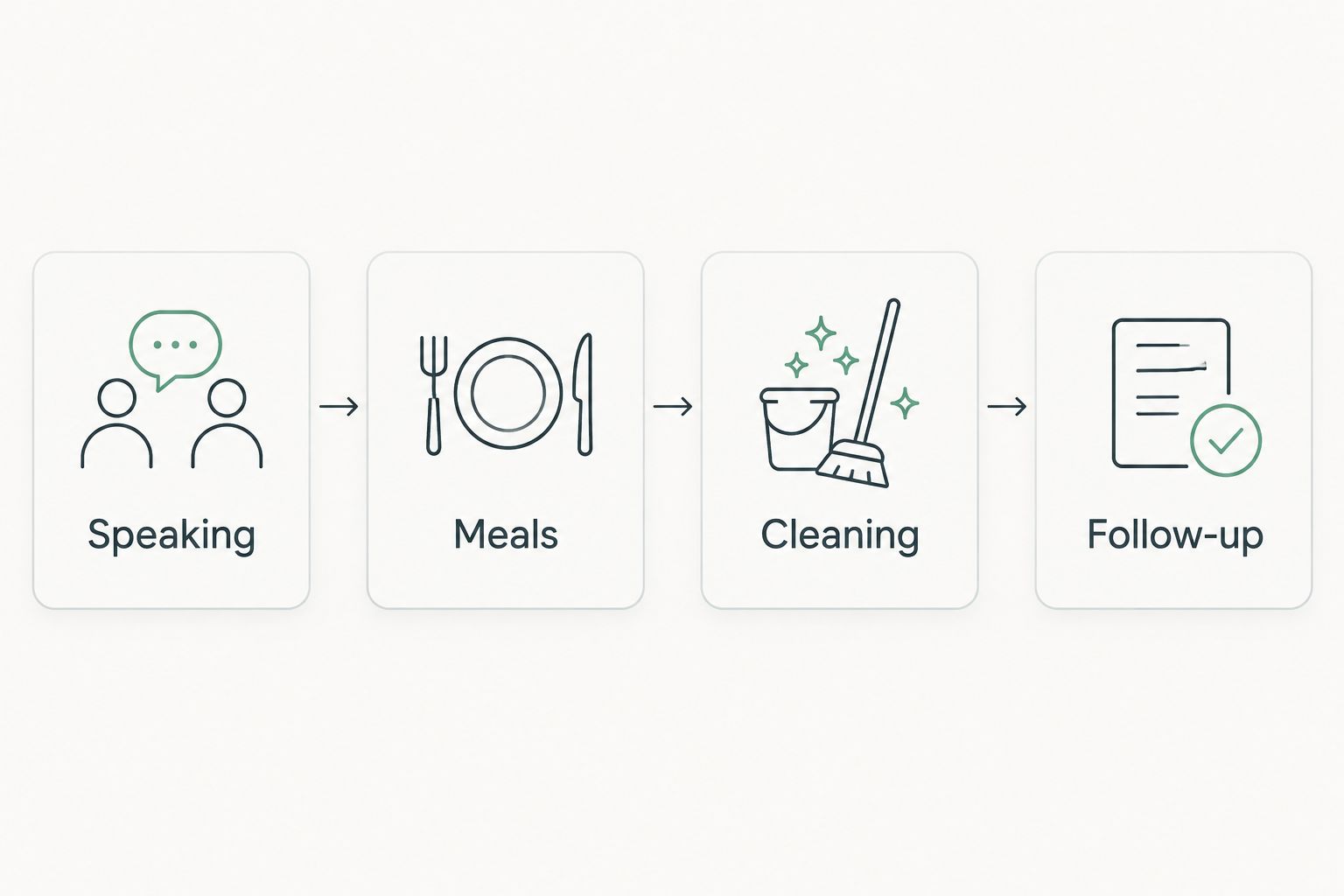
Run through 2 school-day scenarios before your appointment: an ordinary teaching day and a day with lunch duty, meetings or activities. This is a planning exercise, not a clinical test.
Speaking
List the parts of your work that require sustained speech: explaining concepts, reading aloud, language teaching or presentations. Ask how to manage adaptation and what to do if speech concerns persist.
Do not assume that clear trays are unnoticeable in every conversation. Appearance and speech are separate questions, and neither has the same answer for every patient.
Meals
Identify where you would remove and safely store aligners before eating. Then consider whether your usual lunch break leaves room to follow the cleaning instructions you receive.
If your day includes frequent snacks or drinks, describe that honestly during the assessment. Your clinician needs your real routine, not an ideal version of it.
Cleaning
Think about access to a suitable place for oral care at school. Ask what supplies you should carry and how to handle a day when your normal routine is interrupted.
Avoid improvising tray-cleaning methods with hot water or household products. Follow the instructions for your prescribed appliance.
Follow-up
Ask how progress will be assessed and how appointments fit your work commitments. Also establish what to do if an attachment comes off, a tray is damaged or the next tray does not seat properly.
Do not change your prescribed tray sequence on your own. A clear contact process is more useful than guessing between appointments.
What to ask at an Invisalign evaluation
Bring 3 priority questions to your 2026 appointment. They keep the discussion focused on clinical suitability and the practical demands of teaching.
- What needs correcting? Ask the clinician to explain both tooth alignment and your bite: how your upper and lower teeth meet. Straighter-looking front teeth are not the only consideration.
- What would treatment require from me? Discuss wear instructions, cleaning, attachments, appointments and the plan for retaining the result afterward. Retainers are appliances used after active treatment to help maintain tooth positions.
- What are the alternatives? Ask why the proposed treatment is appropriate and whether fixed braces or another approach deserves consideration.
Request 1 written treatment plan you can review before committing. It should make the intended treatment and your responsibilities understandable without requiring you to remember every detail from the appointment.
Ortodonciainvisaling is best suited to teachers seeking a personalized Invisalign evaluation in Las Condes. The confirmed evaluation and iTero scan provide a starting point for that discussion, not a promise of eligibility or results.
Discuss Invisalign for your teaching routine
Explore a personalized evaluation and ask how treatment would fit your classroom responsibilities.
How these options were ranked
This 2026 guide ranks decision routes by their relevance to teachers seeking discreet treatment. Invisalign comes first as the named clear-aligner treatment offered by the featured clinic; other supervised aligners provide a comparison route, while fixed braces address the specific concern of managing removable trays.
The criteria are clinical suitability, speaking demands, wear routine, cleaning, oversight and treatment scope. The ranking does not establish that one appliance produces better outcomes for every teacher. Your examination determines the appropriate recommendation.
Which option should you choose?
Start with an Invisalign evaluation if discreet, removable treatment is your priority. Compare another supervised aligner plan when you need a clearer understanding of the proposed approach; discuss fixed braces when daily tray management is your main obstacle.
For your 2026 decision, choose a treatment you understand and can follow. Do not commit while questions about suitability, responsibilities or follow-up remain unanswered.
FAQ
What are the best clear aligners for teachers?
The best clear aligners for teachers are those that suit their dental needs and prescribed daily routine. Invisalign is an option to discuss, but an individual assessment must determine whether it is appropriate.
Will Invisalign affect my speech while teaching?
Invisalign can affect speech during adaptation, and experiences differ between patients. Discuss your teaching duties before treatment and ask what to do if speech changes persist.
Can I remove my aligners for every lesson?
Do not plan routine removal for lessons without discussing it with your clinician. Repeated removal can conflict with the prescribed wear schedule, so classroom speaking needs should be addressed before treatment.
Is Invisalign better than braces for teachers?
Invisalign is not universally better than braces for teachers. Removable trays and fixed brackets create different daily responsibilities, and your teeth, bite and routine determine the appropriate choice.
Can I eat lunch at school with clear aligners?
You remove clear aligners before eating and follow the cleaning instructions before reinserting them. Plan a safe storage place and discuss how to manage your actual school lunch routine.
Does an iTero scan guarantee my treatment result?
An iTero scan does not guarantee a treatment result. It creates a digital record that supports assessment and planning; clinical findings and treatment progress still require individual evaluation.
Where can teachers from Providencia arrange an Invisalign evaluation?
Teachers from Providencia can consider Ortodonciainvisaling at Avenida Las Condes 10465. This is the verified address in Las Condes, not confirmation of a Providencia location.
One last thing
Bring your teaching timetable, not just a photo of the smile you want. Mark lessons, breaks, lunch duty and meetings so the evaluation can address the moments when treatment care would actually happen.
A plan that sounds manageable during an appointment still has to work on a crowded school day. Ask about those difficult moments before you commit.