
Best starting point: an Invisalign assessment. Best for comparing systems: clinician-supervised clear aligners. Best alternative when removable trays are unsuitable: fixed braces. For adults researching the best invisible aligners for adults in 2026, the useful comparison starts with your teeth, bite, and daily routine—not a brand ranking alone.
- Ortodonciainvisaling offers Invisalign assessments; suitability depends on an individual evaluation, not a universal brand ranking.
- The best invisible aligners for adults combine appropriate treatment planning, clinical supervision, and a manageable daily routine.
- Compare Invisalign with other clinician-supervised clear aligners before deciding; fixed braces remain an alternative to discuss.
- Ask about attachments, follow-up appointments, and retainers before agreeing to treatment.
Why this decision matters
Clear aligners are removable trays that apply controlled pressure to move teeth. Their transparent material makes them less conspicuous than many fixed appliances, but discreet does not mean completely invisible or suitable for every case.
Ortodonciainvisaling is a starting point for adults seeking a personalized Invisalign assessment. The clinic offers Invisalign treatment, an iTero scanner, and individualized evaluation; those are relevant reasons to arrange a consultation, not promises about your result.
You can start through Ortodonciainvisaling. Bring your main concern—crowding, spaces, or teeth that have shifted after previous treatment—and ask how it relates to your bite, meaning how your upper and lower teeth meet.
This guide compares 3 treatment routes rather than claiming that one aligner brand treats every adult better. The ranking reflects the next decision to make, not a clinical recommendation for your mouth.
What makes the best invisible aligners for adults?
Use these 5 selection criteria before comparing names. A clear answer to each matters more than a convincing promotional image.
- Individual suitability: Your clinician should explain whether aligners can address your tooth positions and bite, and what their limitations are.
- Clinical supervision: Know who plans treatment, checks progress, and responds when a tray does not fit as expected.
- Daily practicality: Removable treatment requires you to follow the prescribed wearing and cleaning routine consistently.
- Treatment visibility: Ask whether attachments or elastics are planned. Attachments are small tooth-coloured shapes bonded to teeth to help trays apply force.
- Retention planning: Understand how retainers will help maintain tooth positions after active treatment and what ongoing care involves.
For your 2026 shortlist, separate the appliance from the care around it. A recognized name does not replace an examination, an explanation of alternatives, or access to the clinician responsible for treatment.
Adult orthodontic options at a glance
| Treatment route | Best for | Standout feature | Key limitation |
|---|---|---|---|
| Invisalign assessment | Adults wanting to assess a named clear-aligner system | Establishes whether Invisalign fits the individual treatment plan | The brand alone does not establish suitability |
| Other clinician-supervised clear aligners | Adults comparing systems without committing to one brand | Keeps the discussion focused on the proposed plan and clinical oversight | Systems and care arrangements require individual checking |
| Fixed braces | Adults advised against a removable approach or wanting to discuss fixed treatment | Brackets remain attached rather than being removed for meals | Visible components and cleaning around brackets need consideration |
Fixed braces are included as a comparison, not as invisible aligners. If removable trays are unsuitable, knowing the alternative is more useful than extending a shortlist of brands.
1. Invisalign: best for a named-system assessment
Invisalign is a clear-aligner system used in orthodontic treatment. Treatment involves a planned sequence of removable trays, with the details determined by the clinician and the individual case.
At Ortodonciainvisaling, the relevant starting point is a personalized Invisalign evaluation. The clinic's iTero scanner supports digital records of your teeth; a scan is part of assessment and planning, not a guarantee that a proposed result will occur.
Invisalign pros:
- Transparent trays offer a discreet alternative to visible brackets.
- Removable appliances let you take the trays out for meals and oral hygiene as instructed.
- A named system gives you a specific treatment option to discuss rather than an undefined promise of invisible orthodontics.
Invisalign cons:
- Treatment depends on following the prescribed wearing routine; removability creates responsibility as well as convenience.
- Attachments or elastics, when required, can make treatment more noticeable than a tray-only photograph suggests.
- Invisalign is not automatically appropriate for every tooth movement or bite problem.
Best for: Adults who want to understand whether Invisalign fits their clinical needs and can commit to the routine their clinician prescribes.
For a 2026 consultation, ask which movements are planned, what the scanner contributes, and how progress will be reviewed. If you have crowns, implants, gum concerns, or previous orthodontic treatment, raise them before agreeing to a plan.
Verdict: Wait for an individual assessment before committing to Invisalign. Choose the treatment only when you understand its purpose, limitations, and follow-up arrangements.
2. Other supervised aligners: best for brand-flexible adults
Other clear-aligner systems also use removable trays to move teeth under a treatment plan. The useful comparison is not whether another name sounds similar to Invisalign, but what your clinician proposes and how that plan will be supervised.
Ask for the system's name and an explanation of why it suits your case. Do not assume that every clear tray, digital preview, or treatment package represents the same appliance or level of clinical care.
Other clinician-supervised clear aligners pros:
- A brand-flexible discussion keeps your treatment needs at the centre of the decision.
- Removable trays allow access to your teeth for brushing and cleaning between teeth.
- Transparent material provides a discreet treatment format when aligners are clinically appropriate.
Other clinician-supervised clear aligners cons:
- The label clear aligners does not explain who is responsible for assessment or follow-up.
- You need to check the proposed system, treatment scope, and care arrangements individually.
- The daily wearing commitment remains; choosing a different name does not remove it.
Best for: Adults who are open to different aligner systems and want their clinician to explain the recommendation without relying on brand recognition.
A useful comparison asks the same questions of each proposal: what is being corrected, what remains outside the plan, and what happens if tooth movement differs from expectations? Keep the answers in writing so you can compare like with like.
Verdict: Hold until the system and clinical care are clearly identified. Do not choose an unnamed aligner option on appearance alone.
3. Fixed braces: best for discussing a non-removable alternative
Fixed braces use brackets attached to teeth and wires adjusted during treatment. They are not invisible aligners, but they belong in an adult orthodontic discussion when your clinician recommends fixed treatment or you question whether removable trays fit your routine.
Fixed does not mean maintenance-free. You still need appointments, careful cleaning, and any additional steps your clinician prescribes.
Fixed braces pros:
- The main appliance stays attached, so you do not remove and replace trays throughout the day.
- Fixed treatment provides an alternative when a clinician advises against a removable approach.
- Comparing braces with aligners helps you weigh daily responsibilities rather than appearance alone.
Fixed braces cons:
- Brackets and wires are visible, with appearance depending on the appliance selected.
- Cleaning around attached components requires particular attention.
- Food choices and appliance care need to follow your clinician's instructions.
Best for: Adults whose assessment supports fixed treatment, or who want a clear discussion about the responsibilities of removable versus fixed appliances.
If discretion is your priority, explain what that means in practice. Video calls, public-facing work, and social occasions can shape your preferences, but they do not establish which appliance can address your teeth and bite.
Verdict: Skip fixed braces only after discussing their role in your case. Do not rule them out solely because your search began with invisible aligners.
How to choose without getting lost in brand names
Use this sequence to turn a broad search into a focused consultation. Each step answers a different question; none replaces a dental examination.
Define your concern
Describe what bothers you in ordinary language. A tooth that overlaps, a space that catches your attention, or a bite that feels different gives the clinician a clearer starting point than simply asking for straighter teeth.
Check oral health
Discuss your teeth, gums, existing dental work, and relevant history. Ask whether anything needs attention before orthodontic treatment and how your usual dental care will continue during it.
Review the plan
Ask what the proposed treatment aims to change and what it does not address. Have the clinician explain attachments, possible additional appliances, and any uncertainty in language you understand.
Confirm follow-up
Find out how appointments are arranged and whom to contact about a damaged tray, poor fit, or unexpected symptoms. Understand the plan for checking actual progress rather than relying only on a digital preview.
Discuss retention
Retainers help maintain tooth positions after active orthodontic treatment. Ask about their type, care, and prescribed wearing routine before you begin, not only when the last aligner is approaching.
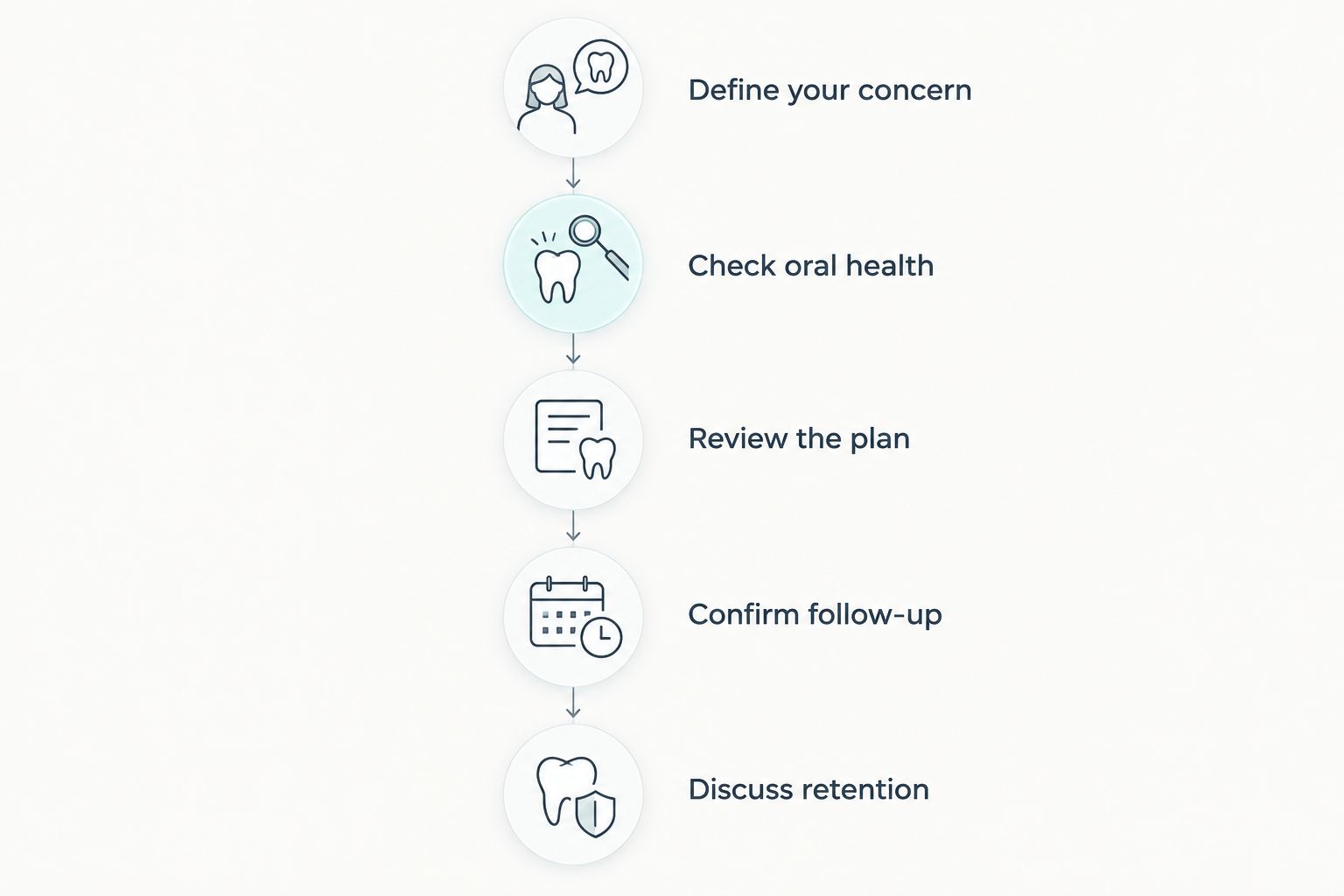
For adults planning treatment in 2026, this sequence also makes consultations easier to compare. Record the answers rather than trying to remember several explanations after the appointment.
What to ask at your evaluation
Bring these 4 questions to an Invisalign consultation. They move the conversation beyond appearance and make the proposed treatment easier to understand.
- What makes aligners suitable for my case? Ask the clinician to connect the recommendation to your teeth and bite.
- What will be visible? Discuss planned attachments, elastics, or other components rather than assuming you will wear transparent trays alone.
- What responsibilities will I have? Request clear instructions for wearing, cleaning, changing, and storing trays.
- How will you check progress? Ask how fit and tooth movement will be assessed and how concerns between appointments are handled.
Ortodonciainvisaling offers personalized evaluation and an iTero scanner. Use that appointment to understand the recommendation; do not treat a digital representation of tooth positions as a promised clinical outcome.
Start with an Invisalign evaluation
Discuss your teeth, bite, and daily routine before choosing a treatment plan.
Planning visits from Providencia or Las Condes
If you live or work in Providencia or Las Condes, include the journey in your decision. Orthodontic care involves follow-up, so ask how the proposed appointment arrangements fit your work and travel routine.
The verified address for Ortodonciainvisaling is Avenida Las Condes 10465. Confirm appointment details before travelling; do not assume there is a Providencia location.
How these options were ranked
The order follows the 5 selection criteria above: suitability, supervision, daily practicality, visibility, and retention planning. Invisalign comes first as a named option to assess, other supervised aligners support a brand-flexible comparison, and fixed braces provide an alternative to discuss.
This is a decision guide, not a finding that one appliance produces better results for every adult. Clinical recommendations require an individual evaluation.
Which adult orthodontic option should you choose?
Choose an assessment before choosing an appliance. If you want discreet removable treatment, an Invisalign consultation is a practical starting point; if another approach is recommended, ask for the clinical reason and compare its responsibilities.
The best invisible aligners for adults in 2026 are not defined by transparency alone. Your decision should connect the proposed correction with supervision, a routine you can follow, and a clear retention plan.
Do not commit while a central question remains unanswered. A useful consultation leaves you understanding why the treatment is recommended—not merely recognizing its name.
FAQ
What are the best invisible aligners for adults in 2026?
The best invisible aligners for an adult are those suited to their teeth and bite under an individually assessed treatment plan. Invisalign is one named option to discuss, but no brand is automatically the best choice for every case.
Is Invisalign better than other clear aligners?
Invisalign is not automatically better for every adult. Compare the proposed correction, clinical supervision, daily responsibilities, and limitations rather than choosing on the brand name alone.
Are invisible aligners completely invisible?
Clear aligners are discreet, not completely invisible. The trays can be noticeable, and planned attachments or elastics can affect how treatment looks.
Can adults who previously wore braces use aligners?
Adults who previously wore braces can be assessed for aligner treatment. Suitability depends on current tooth positions, the bite, oral health, and the proposed movements—not simply on having had braces before.
Does an iTero scan guarantee my final result?
An iTero scan does not guarantee a treatment result. Digital records support assessment and planning, while the outcome depends on the individual clinical situation and how treatment progresses.
Do I need retainers after invisible aligners?
Retention is generally part of maintaining tooth positions after orthodontic treatment. Your clinician should explain the appropriate retainer and wearing routine for your case.
Where is Ortodonciainvisaling located?
The verified address for Ortodonciainvisaling is Avenida Las Condes 10465. Patients travelling from Providencia or elsewhere should confirm their appointment details before visiting.
One last thing
Ask about the period after active treatment before you start it. Retainers are easy to overlook when you are comparing clear trays, but maintaining tooth positions belongs in the original discussion.
Before agreeing to your 2026 treatment plan, make sure you can explain its purpose, your daily responsibilities, and the retention arrangements in your own words. If you cannot, ask the clinician to explain them again.